

How Orano wins and delivers complex projects, one document at a time

Orano, a global player in the nuclear fuel cycle, is recognized for its high standards of precision, safety, and compliance. Every project it wins and delivers runs on documentation: RFPs to answer, work packages to subcontract, safety files to validate.

Contact us
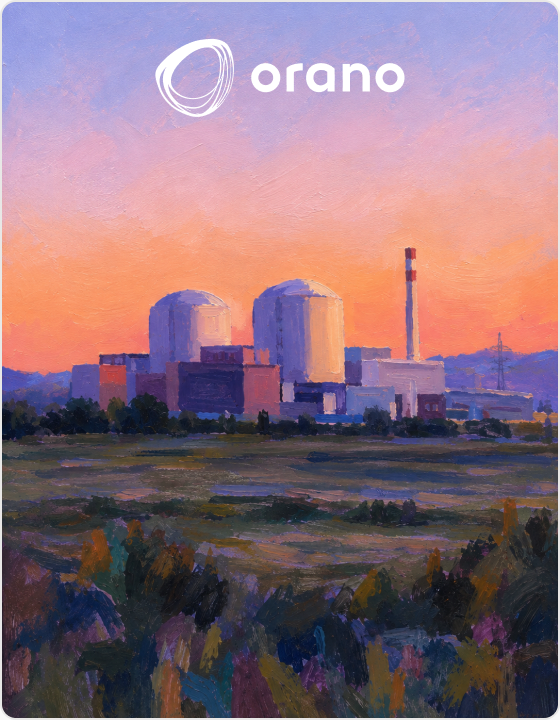
Orano customer story card

Orano's story

Learn more about Orano

Orano, a global player in the nuclear fuel cycle, is recognized for its high standards of precision, safety, and compliance.

Behind every successful project lies a mountain of documentation: the ultra-complex RFP response that wins it, the work packages that frame the subcontractors, the safety documents that let it run, the study reports and intervention summaries that prove the work. Long, essential documents, produced manually by experts.

For the past year, Orano teams have been working with cobl (formerly Thinkeo) to rethink this document production process.

Initiated by Orano’s Innovation department, the collaboration began as an exploratory test before evolving into a broader cultural shift.
The challenge: complexity, volume, and traceability

In the nuclear sector, documentation is both the foundation and the bottleneck of operations. A project cannot be won before the RFP is answered, and cannot run without its safety files. Each deliverable combines text, tables, figures, cross-references, and regulatory data across dozens of pages.

The goal was not only to go faster but also to help improve structure and consistency across teams while maintaining a high level of expertise and traceability.

The solution: modular workflows

The first tests were carried out within support functions, where document formats were sufficiently standardized.

In just a few weeks, these teams were able to experiment with automated workflows for generating and summarizing documents that were previously drafted manually and were highly time-consuming.

Experiments quickly expanded to engineering teams, with agents capable of analyzing intervention reports, summarizing findings, and automatically completing technical grids based on multiple documents.

These more demanding use cases demonstrated that multi-agent systems could produce structured first drafts, offering engineers a reliable foundation for reviewing, modifying, enriching, and validating outputs.

The results: time savings, ROI, and AI adoption

The benefits were concrete and measurable:

  • Significant streamlining of documentation work
  • Fast iteration cycles, with applications built and tested in just a few days

Documentation is no longer the bottleneck between a project won and a project delivered.

The next phase of the project is to continue exploring the potential of using cobl for additional topics within Orano, and possibly turn it into a group-level “solution.”

The objective remains clear: use AI where it truly adds value, without seeking to automate everything, and without ever replacing expert validation.

Consulting

5–10 days per doc

5–10 days per doc

5–10 days per doc

5–10 days per doc

From manual pain to measurable gains

See the difference before and after adopting cobl’s AI agents.

Before

After

Your next proposal is 2 minutes away

cobl drafts, personalizes, and formats it. You just hit send.

Cartoon document mascot wearing sunglasses and waving, used as a friendly greeting or sign-off.