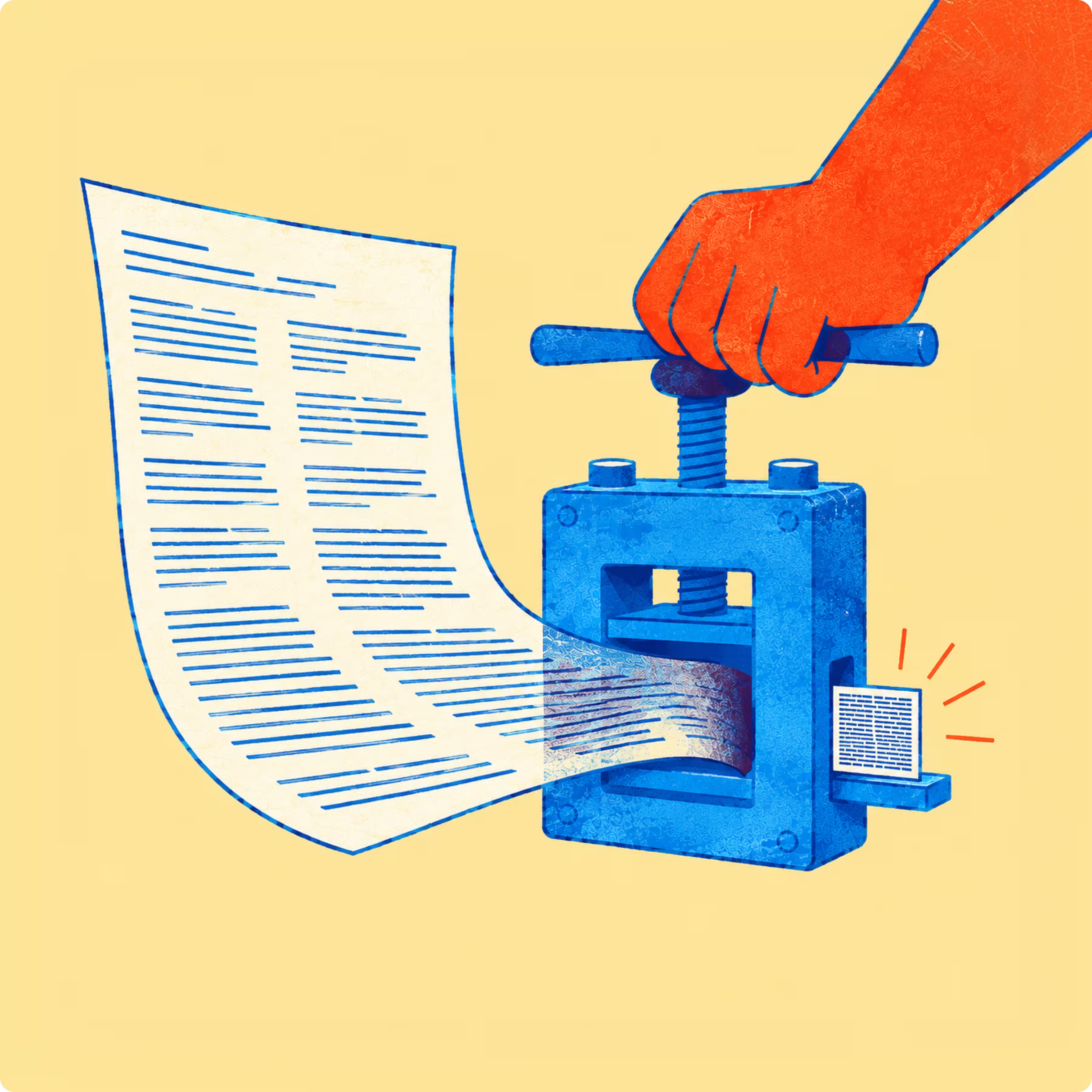



AI isn’t a nice-to-have anymore; it’s a requirement. According to Loopio’s RFP Response Trends & Benchmarks report, 79% of sales teams use generative AI for RFP (request for proposal) responses, up from 34% in 2023. But according to APMP reports, the average time to send a proposal after an RFP is still 25 hours. For teams not already using AI in your proposals, learning how to write a sales proposal with AI should be one of their first priorities. But it’s clear from the data that even teams using AI aren’t saving that much time.
Tech isn’t the problem. Their workflow is.
In this guide, we’ll cover exactly how to write a sales proposal that wins deals, while using AI to do it in a fraction of the time it would usually take.
What is a sales proposal?
A sales proposal is a standalone document a sales team sends to a prospect to try and get their business. It explains their product or service, compares it to the prospect’s stated needs, and outlines the terms for delivering that product or service. The goal of a proposal is to formalize the conversations you’ve had with a prospect in a clear document that, ideally, leads to a sale. A sales proposal should answer most (if not all) of a prospect’s questions, and allow them to get approval from stakeholders before making a decision.
When should you send a sales proposal?
When you send a sales proposal is almost as important as what you put in it. Send it too early, and you might not have everything you need to build it. Send it too late, and the deal’s already been lost. Sales proposals can be sent at other stages of the deal cycle, but they should reflect where your prospect is in that cycle. But you need enough information to have a chance of winning the deal, which means the ideal time to send a proposal is usually after discovery. But teams with a slow proposal creation process might lose a deal if they start after discovery. Your proposal should be sent after you’ve gathered enough information for discovery, but that doesn’t mean you can’t start writing it before.
Solicited vs. unsolicited proposals
The ideal time to send a sales proposal depends on whether it’s solicited or unsolicited. A solicited proposal is one the prospect requests specifically. They’ve articulated their needs and have asked to see what you can offer. You should send a solicited proposal as soon as possible after it’s been requested, while maintaining a certain level of quality.
An unsolicited proposal is sent before a buyer expresses a desire for it. Sales teams will rarely send unsolicited proposals, and even then only when they know they’re likely to be a good fit. An unsolicited proposal is usually sent before discovery is complete.
What should a sales proposal include?
Sales proposals should be customized to your prospect, your industry, and your offering. But, that being said, they should still follow this sales proposal format.
Section 1: Cover page
The cover page should include the name of your company, your prospect’s company, the date it’s sent, and the proposal number to reference it later. It needs to be accurate to your brand and, ideally, have a visual that catches the eye.
Section 2: Executive summary
Sales teams often make two mistakes with the executive summary:
- They make it too generic.
- They make it about their company rather than the prospect.
The executive summary should lead with the prospect’s problem rather than what your product or service can do. Align stakeholder priorities, reflect the prospect’s challenges, and guide decision making with the right details.
Section 3: Problem statement
Define the prospect’s problem in the client’s language, using what you uncovered in discovery. The goal is to quickly show that you understand exactly what they need, before you move into how you’re going to meet that need.
Section 4: Proposed solution
How are you going to solve the prospect’s problem? You want to be specific here, using actual examples from what you’ve done in the past. Calling your strategy “comprehensive” doesn’t cut it. Describe it and what you’re going to do.
Section 5: Pricing
The pricing section is one of the most important in your proposal, second only to the executive summary. Prospects appreciate details, so they know exactly what they’re paying for, but it’s easy to go overboard here. Consider offering just a single recommended price rather than multiple tiers. That says you’ve built a proposal specific to a prospect’s needs rather than just copying and pasting your pricing page.
Section 6: Timeline and next steps
This section details what’s going to happen after a prospect accepts your offer. Include specific steps, dates for those steps, and a clear call to action describing the next step they need to take.
Section 7: Social proof and terms
At the tail end of your proposal, you should include case studies and testimonials describing the product or service you’re offering in your proposal. After that, make sure to list the terms involved in your offer. If the tool you use for sending proposals supports e-signatures, include a block for that as well.
How to write a business proposal that actually wins deals
Here’s some actionable advice your teams can use to improve the way they write sales proposals.
Lead with the prospect’s problem (not yours)
The first few lines of your proposal should outline your prospect’s needs, showing that you understand exactly what they’re looking for. Too many sales teams draft this section according to what they can offer, which doesn’t answer the prospect’s most pressing question: “Can you fix my problem?”
Be specific about scope
A prospect reading your proposal should know exactly what you’re going to offer them, how it’ll be delivered, and how it’ll meet their needs. You need to be specific about each of these elements, rather than making broad promises. Being overly broad erodes trust. Specificity builds it.
Use the prospect’s language
If you’re sending a proposal after discovery, you should have plenty of conversations in which prospects explain their problem and their needs. Using that language in your proposal shows that you understand what they’re looking for and increases your chances of winning a deal.
Keep it short
It’s tempting to pack your proposal with details to answer every potential question, but a 30-page proposal will rarely lead to a won deal. You need to strike a balance between a proposal that’s thorough enough to answer a prospect’s questions without overwhelming them with its length. The best way to do that? Review what’s worked for you in the past.
End with a clear next step
Your proposal shouldn’t leave a prospect wondering what’s next. Have a clear next step, whether that’s getting a signature, setting up a call with your team, or even just emailing you to confirm they want to move forward.
How to write a sales proposal with AI
AI doesn’t completely replace the salesperson in the proposal creation process. It takes on the grunt work (e.g., research, building templates) but still depends on human approvals, human judgment, and human context. Most AI-powered proposal tools will have this process built in, meaning they’ll ask the right questions at every stage, guiding you through drafting every proposal.
Here’s how you can write a proposal with AI.
Step 1: Prep your inputs
An AI model is only as good as the data you give it. That’s why a tool that integrates natively with your CRM is so important; it can pull prospect info, pain points from discovery calls, and language from winning proposals. Where a rep would usually need to spend hours researching what they need to build a fully custom proposal, an AI model can do it in minutes.
AI tools can usually also connect with other tools, like Slack, Teams, or Google Drive, to get a more complete picture of what you need from your proposals.+
Step 2: Choose your proposal template
Depending on the AI tool you use, you can either choose from a selection of pre-made proposal templates or generate a new template every time. Even when generating brand new templates, you should have a list of proven prompts, with clear parameters on what to include.
An AI tool can also guide you through choosing the right template, like what a discovery proposal should include.
Step 3: Generate the first draft
Once you’ve prompted it, your AI tool will build the first draft of your proposal in moments. It may ask for additional context or offer examples you can choose between for specific sections. It can also pull from what it knows about a prospect, based on discovery conversations and prospecting data, to get context for that draft. The first draft will be personalized with both your and your prospect’s branding, and can be tailored to specific industries, products, and pain points.
Step 4: Review and personalize
This is where a salesperson can have the most impact. AI models can generate executive summaries, scope, and problem framing pretty effectively on the first go. But you should always review pricing information, specific deliverables, and strategic position. Not only that, but AI tools like Cobl allow you to make any edits with natural language, as though you were talking with a colleague.
Want to try drafting a sales proposal with AI? Try Cobl for free.
Step 5: Send, track, and follow up
Proposals are best sent with live links, which allow you to track when they’re opened, how long they’re read, and which sections prospects spend the most time on. If you have that data, make sure your salespeople know to follow up when a prospect is reading your proposal, rather than days later.
Sales proposal mistakes that kill deals
Here’s a quick list of the mistakes your team should watch out for in your proposal process.
- Sending before discovery is done: In rare cases, an unsolicited proposal can be sent before you finish discovery. But this stage is so essential to finding the language you should use and the actual needs you need to meet that you should almost always send proposals when it’s complete.
- Generic executive summaries: In too many sales proposals, the executive summary is more about your company than about the prospect and their needs.
- Vague scope: Promises you make in your proposal should be specific. This allows you to build trust with prospects, where vague scope can kill trust before you even have a chance to build it.
- Burying price: The time prospects spend reading the pricing section is second only to the time spent reading the introduction. It’s a vital part of your proposal, and too many sales teams copy and paste it wholesale. Worse, they don’t set up this section by tying price to value.
- Sending static PDFs: A PDF is easy to produce and send, but it has serious weaknesses. It doesn’t give you any data, it can’t be signed without any extra tools, and it can’t include any dynamic elements or multimedia. Consider other options.
- No follow-up system: A proposal needs to stand on its own, but that doesn’t mean you should sit back and wait once they’re sent. A timely follow-up (ideally right when a prospect is reading your proposal) can make the difference between a won deal and a lost one.
Get a free sales proposal template
With Cobl, you can build your first proposal in minutes, even if you don’t have all the data you need right away. Whether you need a discovery proposal, an RFP response, or a detailed proposal for an enterprise deal. Sign up for a free Cobl account and generate your first proposal!



.avif)