


AI proposal generator: How it works
Discover how AI proposal generators turn your CRM data, past proposals, and product info into fully personalized, high-quality sales proposals in minutes, so you can save time and close more deals.

A proposal can be a make-or-break point in your sales pipeline. It can save a difficult deal or even tank one that seems like a sure thing. One of the biggest challenges of drafting proposals is spending the right amount of time on each one without turning proposal creation into a bottleneck for your sales process.
That’s where AI proposal generators come in.
Imagine, instead of trying to figure out the right amount of time to spend on a proposal to achieve an optimal closing rate, you could get a professional, complete proposal in 20 minutes. And that time only shrinks the more you use this tool.
Here’s how that works.
What Is an AI Proposal Generator?
Definition and Core Capabilities
An AI proposal generator is a tool that uses various AI technologies to generate sales proposals based on your inputs. Most of these tools use chatbots and copilots to let salespeople make changes to proposals without any technical knowledge. It’s no different than working with a human designer.
AI proposal generators learn from your data, whether that’s with native integration to your CRM or the past proposals you feed them as they work.
AI vs. Automation vs. Templates: Key Differences
AI is the newest approach to streamlining sales proposals, while automations and templates have been used for years. Here’s how they stack up.
AI
- Can act independently.
- Learn from the tasks it performs.
- Can be trained and adjusted using natural language.
Automation
- Automatically performs actions according to pre-programmed requirements.
- Doesn’t learn from tasks it automates.
- Must be customized through visual menus or code.
Templates
- Must be created and updated by salespeople.
- Only exist after you first need them.
- Must be customized to each prospect.
The Technology Behind AI Proposal Generation
AI proposal generators use a variety of technologies to create proposals. Note that there is some overlap between the following technologies, with some relying on others.
Natural Language Processing (NLP)
Natural language processing allows AI tools to read, interpret, and generate human language. It’s what allows proposal generator tools to write proposals, understand feedback from salespeople, and make assumptions from an incomplete prompt (i.e., just a few pieces of information rather than a full paragraph).
Machine Learning Models for Content Generation
Machine learning is what makes the difference between proposal automation and AI-powered proposal generation. This technology allows proposal generators to learn from patterns in your data, which means you don’t have to pre-program everything you need them to do.
Large Language Models (LLMs)
A large language model combines natural language processing and machine learning into a single system. "Large" refers both to the amount of text it was trained on and the parameters the model uses to choose what word or phrase should come next. It allows AI proposal generators to make better decisions at every stage of the process, so each proposal is exactly what you need.
Training Data: How AI Learns What Works
Training data is a term that refers to what you give an AI tool to learn from. Public AI models like ChatGPT and Anthropic’s Claude used a massive amount of training data sourced from the broader internet to get better at understanding and using human language. For a proposal generation tool, training data could be anything from past proposals to conversations with prospects or your pricing information.
How AI Generates Proposals: The Step-by-Step Process
This process might vary slightly based on the tool you use, but AI proposal generators generally follow these steps.
Step 1: Information Gathering and Context Understanding
When a salesperson prompts an AI proposal generator, the first step it takes is finding the information it needs to answer that prompt. If a prompt names a specific prospect, for example, it’ll go looking for context in conversations, pull everything you have on that prospect from your CRM, and get as complete a picture of the deal as it can.
Step 2: Content Analysis and Template Selection
Next, AI proposal generators go through past proposals and start looking for patterns. What structure typically leads to the best results for your company? Which elements should your proposal include and which ones should be excluded?
Step 3: Dynamic Content Generation
At this stage, your tool will use its LLM capabilities to draft each section in your proposal based on what it’s learned in the previous steps. Content from templates is tailored to each specific deal, technical details are included where they make sense, and features are oriented around a prospect’s specific pain points.
Step 4: Personalization Layer Application
Once the initial proposal is drafted, AI proposal generators will take another pass to personalize it further. That means everything from adjusting their tone to adding specific details from conversations and aligning your offer with promises your sales team made.
AI ensures your proposals are always on brand, but it also sources and adds client branding too. Logos, past templates used for proposals with specific clients, colors, font, custom CSS, and more can all be added automatically.
Step 5: Quality Checks and Compliance Verification
AI tools can be trained to automatically check for specific quality markers, from typos to branding, and verify compliance with your style guide and any relevant processes.
Step 6: Formatting and Final Assembly
Most of these steps happen behind the scenes. At this stage, you get to see the results. Everything generated is assembled into the final proposal, with the right branding, the right template, and the right format.
The Data Inputs: What AI Proposal Generators Need
An AI-powered proposal generator is only as good as the data you give it. Here’s what it needs.
CRM Data Integration
Your CRM is the hub for all your sales efforts, but it also has tons of other valuable information, from pricing to common pain points for existing customers.
Product/Service Information
Whether you keep product information in a centralized knowledge base or in scattered documents, giving your AI proposal generator access to these documents will invariably make your proposals better. That can mean Google Drive folders, Notion pages, or wherever else your files live.
Past Proposal Performance Data
Past proposals aren’t disposable; they’re crucial data points. AI can analyze trends and patterns across past proposals faster than your sales team can, surfacing what’s likely to work in the future and tailoring your proposals according to these learnings.
Client-Specific Research and Insights
AI can turn data about churned customers, current customers, and prospects into insights that improve your proposals over time. This is the kind of work that would take a full-time data analyst, or even a full team.
Industry and Competitive Intelligence
Give your AI proposal generator the names of your top competitors, and it can integrate research about them into your sales process, ensuring you stay competitive.
The AI Capabilities That Make Proposals Better
Intelligent Content Selection
AI proposal generators pull from all the content you make available to it, evaluating how relevant it is to the proposal you need. That means it chooses templates and examples according to your prospect’s industry, their company size, and similar factors, just like a human would.
Natural Language Generation at Scale
One of the toughest challenges with proposal generation is that it doesn’t scale. A small sales team can quickly get overwhelmed as it tries to maintain a balance between personalized proposals and quick turnaround times. AI tools can generate proposals at scale, fully customized, with text that reads as if a person wrote it.
Personalization Beyond Mail Merge
AI can achieve deep personalization in a fraction of the time other tools can. It goes beyond just swapping company names in a template; it’s about fully customizing value propositions to specific industries, including technical details where necessary, and more.
Predictive Analytics for Win Probability
AI proposal generators can go beyond the proposal, using past performance to estimate the odds of success for new proposals. These estimates can lead to recommendations for updated templates, new processes, and more.
Continuous Improvement Through Learning
Because machine learning is a key difference between AI proposal generators and automations, your proposals will get consistently better as your tool learns more about your sales process.
How AI Handles Different Types of Content
Executive Summaries and Introductions
Executive summaries need to be specifically tailored to your prospect and their stakeholders. Natural Language Processing and Machine Learning allow AI tools to crunch through hundreds of examples of executive summaries, find what works, and use that to build custom executive summaries every time.
Technical Descriptions and Specifications
Technical details can make or break a deal, but they don’t always need the same depth for every prospect. AI doesn’t just source these details; it can also determine when they’re needed, and how much depth a proposal’s technical section needs.
Pricing Tables and Financial Sections
Pricing tables lead to a 54% higher conversion rate for proposals, but they can be quite time-consuming to put together. AI tools can source pricing from your most up-to-date documentation, turning it into custom pricing tables automatically.
Case Studies and Social Proof
If you have a robust library of case studies and social proof, an AI proposal generator can automatically pepper them throughout your proposals. But it won’t just reference them, it’ll use data from previous proposals to determine where they have the most impact.
Legal Terms and Compliance Content
Legal terms and compliance details can get technical, leading to errors when they’re added to proposals manually. AI can sidestep these errors by comparing them to other proposals.
The Human + AI Collaboration Model
AI proposal generators aren’t meant to fully replace salespeople or the human touch they bring to each proposal. In fact, they work best when humans are involved in the process.
What AI Does Best (and What Humans Should Do)
AI is best suited to the administrative and research work involved in drafting proposals. It can save reps hours in finding the right information to draft a winning proposal. The drafting itself is also something AI tools can easily take on. Humans should always validate the final output, however, especially for proposals that don’t match the training data you give your tool (e.g., it’s for a much bigger deal than you’ve closed historically).
Review and Editing Workflow
Humans should review proposals created by AI, especially where technical and pricing information is involved. If you typically include extensive compliance information in your proposals, having a specialist review them is especially important.
Training the AI with Feedback
AI is trained on the data you give it, but feedback is essential for correcting its approach so it can keep learning over time. Only humans can give that feedback, based on their experience and their knowledge of your business.
Maintaining Brand Voice and Quality
Brand voice is an inherently abstract concept, grounded in terms and experiences only humans can understand fully. AI can replicate your voice in proposals, but human input should still be involved in tailoring that voice.
Behind the Scenes: The Technical Architecture
Cloud Infrastructure and Processing
Cloud infrastructure rapidly became the standard for software, and it’s no different for AI. The raw compute power needed to run AI models means it’s difficult for most organizations to run them on their own servers, and cloud infrastructure puts that power at your fingertips.
API Integrations and Data Flow
An API (application programming interface) is a layer that translates data between apps. Most integrations use APIs to streamline the movement of data across multiple tools. For AI proposal generators, APIs are what allow them to source data from other platforms when they answer your prompts.
Security Measures and Data Protection
AI proposal generators like Cobl use data encryption, automated monitoring, and more security features to ensure that anything you feed an AI model is secure. Just be sure to verify that the tool you use keeps your data private (i.e., doesn’t use it for training) before you feed it anything proprietary.
Model Training and Update Process
AI models are constantly being trained and improved, especially as your own content library grows. Every new proposal feeds into a continuously-improving system, improving it as you work. Testing and validation are an important part of this process, ensuring any improvement keeps the model to its primary objective: helping you close deals.
AI Proposal Generator in Action: Real Examples
Here are a few examples of AI-generated proposals, created by Cobl.
Example 1: New Business Proposal Generation
Initial prompt: “Generate a proposal for a prospect we're trying to close. We sell an HR services software platform aimed at smaller organizations (under 100 employees). Their main pain points are a lack of visibility on employee performance, no standardization for performance reviews and similar processes, and difficulty supporting new managers in upskilling.”
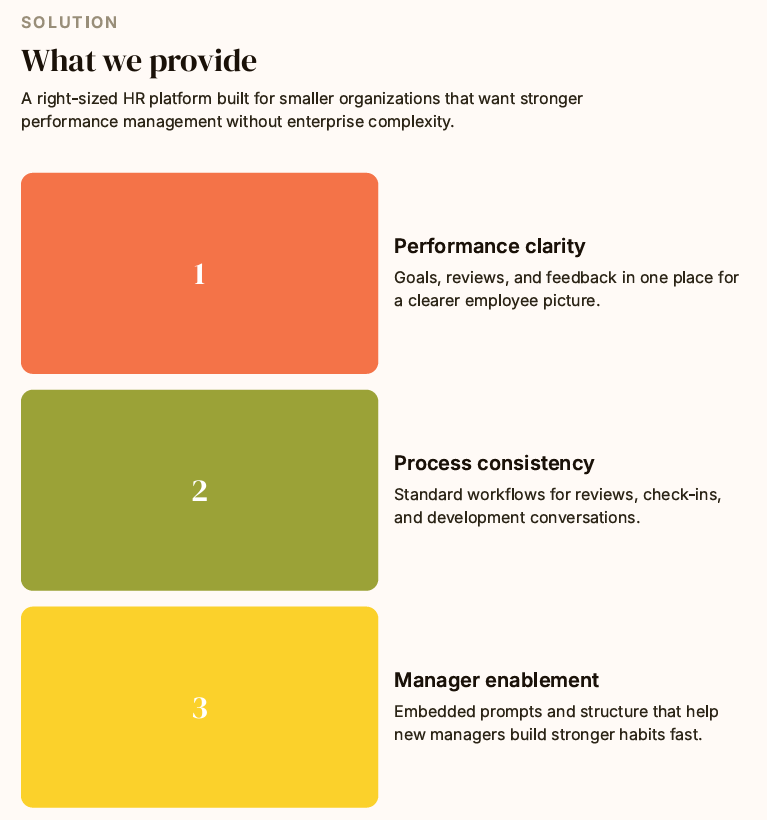
Get the full proposal here.
Example 2: Renewal Proposal with Usage Data
Initial prompt: “A company named Pipes and Fittings Inc is preparing a proposal for a client of theirs, Holistic Property Management Group. They want to renew the yearly contract with this client, with usage data (and the savings that come with that) being used as an argument for this renewal.
This proposal needs to include a range of services a plumbing company would offer a property management group, the costs associated, and the savings a property management group got by having on-call plumbers rather than relying on small, local professionals.”
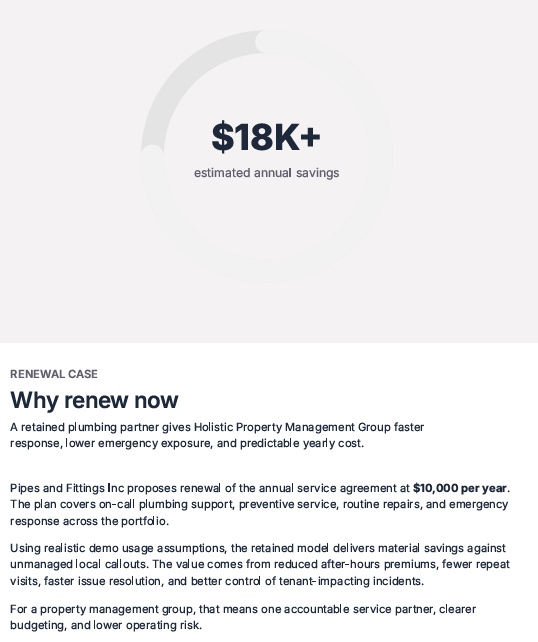
See the full proposal here.
Example 3: Complex Multi-Product Proposal
Initial prompt: “Imagine a company called Fleet Services Inc that vertically integrates every aspect of managing a fleet, from repairs to sourcing new vehicles to loaning vehicles when essential equipment is down. The proposal targets Urban Deliveries Inc, a company that uses everything from light trucks to flatbeds to deliver a variety of products for a client.
I need a proposal that addresses the multiple products involved in a service like this, specifically:
- Mechanical services that beat out other options.
- Parts sourcing that saves money over time.
- Vehicle acquisition that allows owners to determine whether they should get new vehicles or used vehicles and does the legwork for them (i.e., filtering out vehicles with obvious problems).”

See the full proposal here.
Quality Control: How AI Ensures Accuracy
Built-In Fact-Checking Mechanisms
AI cross-references any claims it makes (e.g., which sections a proposal should include) against the data in the systems you give it access to or the past proposals you feed it. This prevents inaccurate claims, data entry mistakes, and similar errors.
Compliance and Legal Review Systems
Validating compliance with regulations can be time-consuming for human salespeople. AI proposal generators can automatically check this against relevant frameworks, tailoring your proposal to ensure it’s compliant.
Brand Consistency Enforcement
Proposal templates don’t keep up with your brand unless you update them manually. AI can ingest your latest brand guidelines so every proposal it creates stays on-brand. All you need to do is give it a link to your website so brand guidelines, color palettes, and images are all added automatically.
Human-in-the-Loop Validation
AI tools aren’t perfect: they can make mistakes. That’s why human-in-the-loop validation is so important. Even with advanced AI models, there should be a human involved in reviewing proposals, making recommendations, and ensuring there aren’t any critical mistakes.
Common Questions About AI Proposal Generators
"Can AI write technical proposals accurately?"
Absolutely. AI tools can search through the data in your CRM, your product documentation, and support tickets to create accurate proposals. It’s still a good idea to have a human in the loop to verify technical details.
"How does AI handle industry-specific terminology?"
AI learns from your data, so as long as you feed it your industry jargon, it can reference it accurately when it drafts proposals.
"What if AI makes mistakes?"
AI can make mistakes, just like human salespeople. That’s why there should always be a salesperson involved in your proposal process, who can review an AI tool’s output.
"How long does AI take to generate a proposal?"
While the exact timeline depends on the type of deal involved, your industry, and the amount of data you’ve trained your tool on, an AI proposal generator can create a proposal in anywhere from two to 30 minutes.
The Future of AI Proposal Generation
Emerging Capabilities on the Horizon
Enhanced autonomy is the first frontier AI models will clear in the future. While tools like Cobl already use AI agents to perform a number of tasks autonomously, their capabilities will soon include things like proactively suggesting when proposals should go out based on deal progression.
Video and Multimedia Proposal Generation
Most proposal generators currently create PDFs and slides; soon, they’ll be able to take the leap into multimedia. Video has a huge impact on sales, and these proposals will, too.
Real-Time Proposal Optimization
Currently, AI-generated proposals are static, meaning they stay the same after they’re sent. There will come a time when AI proposal generators can make edits to proposals even after prospects receive them, answering questions and acting on feedback.
Predictive Proposal Intelligence
Predictive analytics are already a large part of the usefulness of AI models, especially for small teams. This capability is only going to improve with time, giving your salespeople more accurate estimates for everything from proposal conversion rates to overall close rates for your pipeline as a whole.
Send Better Proposals in Less Time With AI
AI proposal generators might feel like magic, but they’re not. When you understand the structured chain of intelligent decisions behind them, from initial data gathering to outlining and tinkering with pricing tables, you can use them to create stronger proposals without sacrificing a level of personalization that contributes to your win rates. Just remember that the best results come from AI and salespeople working together, with AI tools taking on the heavy administrative work while salespeople contribute their instincts and experience to a smoother, more successful process.
Want to see what an AI proposal generator can do? Try Cobl for free.
Getting Started With a free AI Proposal Generator
Ready to start using an AI Proposal Generator? You can try Cobl for free, with up to three generated documents per month.
Try it here.