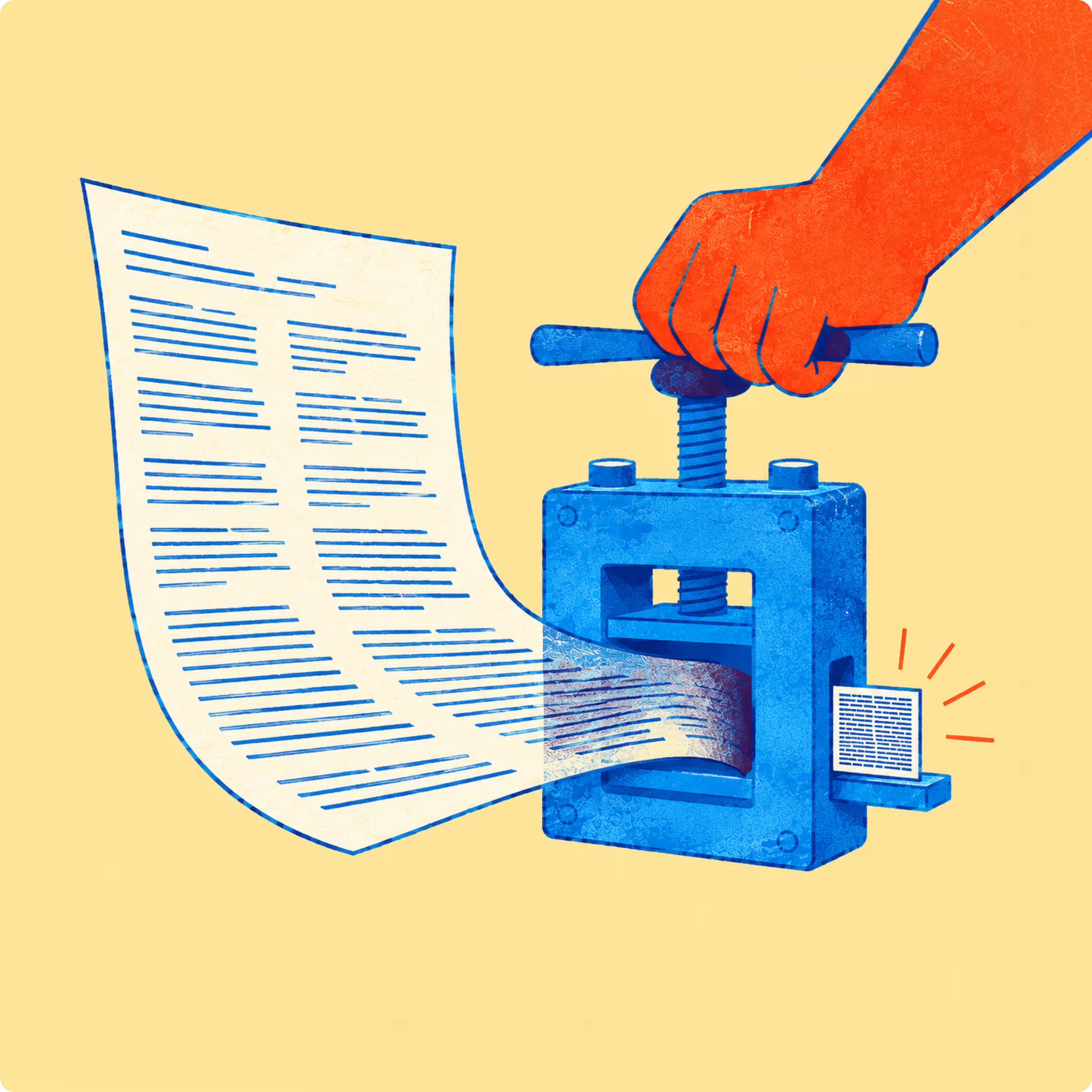



Proposal automation software cuts down average proposal response time by 40-60%.
Is your sales proposal process data-driven? Or is your sales team just getting them done as quickly as they can to get them out the door? Just like any other process, a data-driven approach can help you refine how you draft, send, and customize proposals. Without the right data, you won’t know which changes to make and how they impact your process.
In this guide, you’ll find a wide range of sales proposal statistics so you can refine your process.
The Big Picture: Overall Proposal Performance Statistics
Before delving into the specific statistics that affect your sales process, let’s have a look at the broader industry.
Average Proposal Win Rate
The average RFP (request for proposal) win rate rose from 43% in 2024 to 45% in 2025, the biggest improvement over the past five years. The best-performing teams typically reach win rates of 60% or more. For a broader look at current RFP statistics across industries, proposal teams can compare win rates, response times, and benchmark data to identify improvement opportunities.
How Long It Takes to Close After a Proposal
According to Proposify’s State of Proposals Report, winning sales proposals are acted on within two days of being sent, on average.
The Cost of a Lost Proposal
Proposal opportunities are over five times more expensive than other sales opportunities, since much more investment is put into them by the time they reach the proposal stage. That can represent millions of dollars in lost revenue.
Timing Statistics: When Speed Matters Most
Speed matters in your sales process, and that’s especially true with proposals.
Response Time Impact on Win Rates
Response time has a massive impact on your win rate. Deals in which prospects get answers to their questions within four hours have a 35% higher close rate than deals with a response time surpassing 24 hours.
Proposal Length and Reading Time
Based on an audit of nearly two million proposals, Proposify identified the ideal proposal length for winning proposals as 10 pages. This strikes a balance between thoroughness and skimmability.
Follow-Up Timing After Sending
Following up as quickly as possible when a prospect asks a question is important, but the data is a little different for unsolicited follow-ups. Data from the Martal Group shows that a two to three-day delay between follow-ups can increase reply rates by 11%.
Best Days and Times to Send Proposals
There’s little data on the best days and times to send proposals, but we can look at data for cold outreach. There isn’t a lot of variance in open rates based on days of the week, with less than 1% between the best day for cold emails (Monday) and the worst (Friday). Optimal times, though, are between 4-5pm and between 11am-12pm.
Content Statistics: What to Include (and What to Skip)
Optimal Proposal Length (Pages and Word Count)
According to data from Zomentum, the ideal sales proposal is between six and 10 pages. You generally don’t want to go over a few hundred words per page.
Sections That Increase Win Rates
The section that increases win rates the most is, unsurprisingly, social proof. Adding case studies or testimonials to sales proposals can increase the probability of winning a deal by 73%.
Visual Content Impact: Data on Images, Videos, Charts
Proposify analyzed over one million proposals, finding that images and similar visuals both increase closing rates by 72% and accelerate close by 20%. That said, having to manually create every visual can unnecessarily delay proposal creation, which is where AI-powered proposal software can help streamline your process.
Pricing Presentation: What Works Best
Not only should you include pricing in your proposals, but the best way to represent it is in a table. Sales proposals with pricing tables have a 54% higher conversion rate. However, manually updating pricing tables, even when they’re sourced from previous proposals, can be time-consuming. Especially as your organization scales. That’s why many teams turn to AI-powered proposal software.
Personalization Statistics: The Custom Touch
Personalization vs. Generic: The 40% Win Rate Gap
Proposals built from rigid templates have a win rate between 15% and 25%, while fully customized proposals have win rates between 50% and 65%. The problem? That level of customization isn’t always achievable, especially as your growth accelerates. AI-powered proposal software can help you strike the balance between templates and customization by starting from proposals you’ve already created and building them into exactly what prospects need. It also allows you to upload templates based on your own previous proposals or customer requirements, adapting them to each deal.
Most Impactful Personalization Elements
Personalization makes a massive impact, but you have to pick and choose where you concentrate these efforts. Beyond making sure pricing and terms are correct, you’ll want to address specific objections, promises, and use cases prospects mentioned in previous conversations.
Client Research Time vs. Win Rate Correlation
According to data from Loopio, just a two-hour difference in time spent per proposal stands between top-performing sales teams (35 hours) and other teams (33 hours). Reducing the amount of research time you put into each proposal doesn’t seem to lead to a correlated increase in win rate, unless you use the right tools. AI platforms can eliminate research time without negatively impacting your win rates.
Design and Format Statistics
PDF vs. Interactive Proposals: Performance Comparison
Video-based or interactive proposals typically have an edge on text-based proposals. Conversion rates increase by 80%, while meeting booking rates rise by 41%. That said, these proposals can be a significant investment, usually out of reach for smaller sales teams.
Mobile-Friendly Proposals: A Growing Necessity
Mobile traffic is still a minority in B2B SaaS and similar industries, at just 34.7% of traffic. That said, when one in three prospects already uses mobile to consult your website, they’re likely to read your proposals that way, too. Building mobile-friendly proposals means you can reach more prospects.
Color Psychology in Proposals
Color psychology affects conversion rates and brand perception within the first few moments of an interaction. While proposals should be on-brand (i.e., matching your brand colors), secondary colors can tap into color psychology to affect the reactions you’re looking for in prospects. Having an AI tool that can extract on-brand colors from brand visuals can allow you to optimize for color psychology, especially when you can make edits with natural language.
Engagement Statistics: How Prospects Interact
Average Time Spent Reading Proposals
The more time your prospect spends reading a proposal, the less likely it is to lead to a close deal. Successful proposals are viewed an average of 2.5 times, while unsuccessful ones are viewed 3.5 times.
Most-Read Sections
Prospects spend most of their time in the introduction section of your proposal, while the second most-popular section is the pricing section. When you look into streamlining your proposal process, you’ll want to ensure you still dedicate significant resources to these sections. Because AI-powered proposal tools like Cobl are built specifically with salespeople in mind, they can automatically recommend the right sections for your proposals, leading to better proposals and more won deals.
Multiple Stakeholder Views and Win Rates
According to Proposify’s data, close rates double when a proposal is viewed by multiple stakeholders. Your proposal process shouldn’t just account for this, it should encourage it.
Pricing Statistics: The Money Conversation
Talk About Price Early
More than half of prospects want to discuss on the very first sales call, while only 23% of sales reps actually do so. Your sales process should set up your proposals for success by introducing pricing early.
Tiered Pricing Options Impact
Tiered pricing can lead to a revenue increase of 98% compared to using a single-price model. Having robust pricing tiers and putting time into finding the best way to communicate them in your proposals can lead to a direct impact on your pipeline.
Shifting the Blame Away From Price
Price is often cited as the main reason for lost deals, with sales teams believing 70% of lost deals are caused by a pricing mismatch. But data suggests only 30% of lost deals are actually lost because of price.
Follow-Up Statistics: After You Hit Send
Follow-Up Frequency and Win Rate Correlation
The vast majority of won deals (80%) require between five and 12 follow-ups, with only 2% of deals being won on first contact. Consider your proposal just a point of contact in a longer process. While you need to put time into preparing each proposal, don’t sacrifice the rest of your process. That’s why AI-powered proposal tools are so essential; they remember every follow-up and know all the context for each deal. They can tell you exactly what to put in your next follow-up.
Multi-Channel Follow-Up Performance
Proposals should just be one prong in your strategy. Multi-channel campaigns that use three or more channels lead to 287% higher close rates compared to a single-channel approach. When you send out proposals, have a communication plan in place that builds on them. Some proposal software can build proposals into broader marketing automation campaigns, giving you a single place to manage your entire strategy.
When Prospects Go Silent: Recovery Statistics
Proposals that send automated reminders are 10% more likely to close, but only 7% of salespeople actually use them. If your proposal software supports them, make sure these automated reminders are in place. If not, use other tools to set these reminders.
Industry-Specific Statistics
B2B SaaS Proposal Benchmarks
- B2B SaaS teams see win rates between 20% and 30%, though teams targeting small and medium businesses see higher rates, due to shorter deal cycles.
- Typical B2B sales cycles last 84 days, having grown 22% longer since 2022.
Professional Services Proposal Data
- The top 2% of professional services firms have win rates above 80% while the bottom 4% have win rates below 10%. Most firms fall somewhere between these two figures.
- Requests for proposals are critical for growth across professional services, with management consulting unseating insurance as the industry leader for annual proposal submissions for the first time.
Consulting Proposal Performance
- For competitive consulting markets, expect a win rate between 30% and 50%, with 60% rates achievable for high-performing firms.
- Consulting firms added nine to 13 more proposals to their annual workload in 2026. AI-powered proposal software can help firms manage this growing workload without sacrificing proposal quality.
Enterprise Sales Statistics
- Deals in enterprise sales have an average of 13 decision makers for a single deal, meaning proposals need to account for this.
- Win rates decrease as deal size increases, with deals worth more than $100,000 having a win rate averaging between 12% and 18%.
How Top-Performing Proposals Differ: The 80th Percentile
What the Best Proposals Have in Common
The best-performing proposals typically have the following things in common:
- Images: 85% of successful proposals have images, with winning proposals having 12 images on average.
- They’re sent quickly: When a proposal is sent within 24 hours of a conversation, the chances of winning that deal increase by up to 25%.
- They’re short: Winning proposals average 11 pages, with seven sections (one fewer than losing proposals).
- They allow e-signatures: E-signature support makes your proposal 3.4x more likely to close, and that close typically comes 33% faster.
- They include social proof: Case studies and testimonials increase the chances your proposal leads to a won deal by 73%.
- They’re personalized: While templates can help your teams complete proposals more quickly, over-reliance on them can hamper your win rates. Heavily-templated proposals have win rates ranging from 15% to 25% while fully-customized proposals reach win rates up to 65%.
Mistakes That Kill Deals: Statistics on Failures
Here are some common mistakes you should avoid when sending proposals:
- Sending proposals too late: Proposals sent out three to four days after your last touchpoint with a prospect have significantly lowered conversion rates.
- Making proposals too long: Proposals beyond 11 pages tend to lead to lower win rates.
- Not focusing on the buyer: Customizing just 30% of a proposal’s executive summary to your prospect increases close rates by 50%. Skipping this work can thus lead to losing proposals.
- Giving up on following up too soon: The vast majority of salespeople stop following up too early. 80% of successful sales need five to 12 contacts after an initial outreach.
- Presenting features instead of outcomes: 73% of buyers say sales interactions feel too transactional, meaning they don’t focus on their needs.
Using These Statistics: Action Plan for Improvement
So how do you use these statistics (and your own data) to your advantage?
Prioritizing Changes Based on Impact
Every change you make to your proposal process should be tied to some kind of metric. That means you need to have a clear picture of how your proposals impact your sales pipeline, where they tend to fail, and what you should do to improve them. Say, for example, you want to test an AI-powered proposal tool. You could tie this experiment to the level of customization in each proposal; that way, you have clear impacts to demonstrate the effectiveness of that tool.
A/B Testing Your Proposals
Whenever you change something about the way you write or send proposals, use A/B testing to quickly get a sense of that change’s impact. Draft and send half of your proposals the same way you usually would, and apply your changes to the other half. Clearly label which group your proposals belong to, and review each group’s performance after a certain number of proposals have been sent.
Building a Data-Driven Proposal Process
Building a data-driven proposal process allows you to make incremental improvements to the way you draft, send, and review proposals. A sales platform or CRM can help you get the data you need to do this, but you also need a dedicated process for reviewing that data and making these improvements. Dedicate time every month or quarter to review proposal performance and any changes you’ve made to see if they should be kept or reevaluated.
Build better proposals and win more deals
The right length. The right response time. The right sections. There’s a lot that goes into making winning proposals, and that requires significant time and effort from your teams. While a data-driven approach is essential for improving the way you create and send proposals, it’s not all you need. You need a platform that streamlines proposal creation without making you sacrifice customization. You need AI-powered proposal software like Cobl.
Want to see what Cobl can do for your proposals? Sign up for the platform here.



.avif)